
Get Started
Never played Inkbright before? Here's the shape of it.
This isn't the rulebook. It's a quick orientation to how Inkbright actually plays.
When your Hero tries something and the outcome is in doubt…
Choose your approach
Say what you do.
If it’s risky or uncertain, the Narrator will call for a roll.
Build your dice pool
Choose an action.
Start with d6s equal to your action rating.
Danger and difficulty
How dangerous your action is and how likely you will achieve the outcome. The Narrator sets this, and it nudges a die after it lands.
Raise any die by one.
Your approach fits the situation.
Drop the highest die by one.
Your approach fights the situation.
Bonus dice
You may add up to two bonus dice before rolling, both optional:
 Push: 1 Will.
 or Tempt Fate: 1 Fate to the Narrator.plus Help from an ally, who spends 1 Will and passes you one of their dice.
Roll and read
Roll your pool and read your highest die.
Worked example
Action rating 3
 × 3
+ Push, 1 Will

+ Help from an ally
The ally spends 1 Will.
= 5 dice
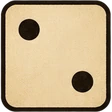
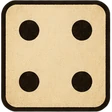
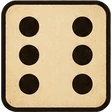
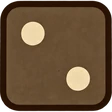
Roll them together. The 6 is the highest.

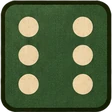
Crit
6 + 6
Get what you want without consequence. Narrate how it happens.
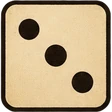
Hit
6
Get what you want without consequence.
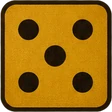
Swing
4–5
You get what you want, but face problems.
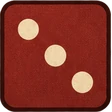
Miss
1–3
Do not get what you want, with problems. Gain 1 Will.
Actions
Use these to act.
Cite 2 Wisdom 3
Your action rating is read across its row; your attribute rating is read from the first column.
Attributes
Use these to resist or defend.
Handle manual finesse
Sneak act & move unseen
Vault move swift & sure
Attend care for the living
Compose create beauty
Sway charm & persuade
Discern read clues & motives
Invent engineer solutions
Trick outwit with guile
Fight physical conflict
Heft overcome with strength
Hunt wear down a target
Barter strike a deal
Command exert authority
Perform rally & captivate
Cite apply lore & precedent
Divine mystical insight
Fathom untangle the truth
When the world answers back and your Hero might be hurt…
On a Swing or a Miss
The Narrator rolls the danger dice based on position. They sum two dice to create a value: your danger.
Stress or damage
The Narrator indicates danger or damage. You may resist danger. You defend against damage.
Attributes add protection
You can add an attribute to your threshold. This may help lower the severity.
Use Armour or Luck
Spend 1 Armour to reduce the severity of damage.
Spend 1 Luck to reduce the severity of stress.
Stress lose Will
When resisting perils, the amount of Will lost is set by your resistance.
Damage lose Health
When taking damage, the amount of Health lost is set by your defence.
Severity is set by your danger being at or above a threshold. Stress thresholds are 6 and 9; they do not change. Damage thresholds (n) are your defence numbers, set by your armour.
Resist stress
Add your attribute to your resistance before you decide whether to accept the danger.
Defend damage
Add your attribute to your defence. Defending costs a beat in combat.
Four things track your Hero’s state from moment to moment.

Health
How much punishment a Hero can take before they're out of the fight.

Armour
What a Hero spends to soften a bad hit. How much you have depends on what you wear.

Will
What a Hero spends to push past their limits, for themselves or an ally.

Luck
What turns a bad roll back in a Hero's favour, right when it matters.
A round of action.
Determine initiative
First round only. This sets your starting beats.
Narrator starts with the spotlight
The Narrator makes monsters act. After, the spotlight passes to the Heroes.
Heroes have the spotlight
Heroes share the spotlight freely among them. Each significant action costs a beat.
Spotlight passes to the Narrator
On a swing, miss, or a trigger, the spotlight passes. The Narrator spends 1 Fate to activate all of one type of creature.
End the round
When Heroes have spent all beats, the round ends. The Narrator can activate the environment.
Initiative results: beats in the first round
Miss
 beat
Swing
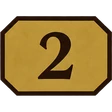 beats
Hit
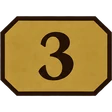 beats
Crit
beats, and 1 to an ally
Act
Act or attack. Take a meaningful action, or attack a target. May move 1 zone before or after.
Dash
Move up to 2 adjacent zones. Dashing does not avoid terrain marks.
Defend
Add to defence. When taking damage, you can spend a beat to add an attribute to your defence.
Team up

Team up with another Hero. Both spend 1 beat and 1 Will, use the best attack roll and apply both sets of damage.
Narrator
The Narrator takes the spotlight: on a swing or miss, on a monster’s trigger, when the players hesitate.
Light damage
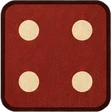
2d6 7 damage
Medium damage
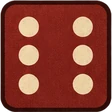
Best 2 of 3d6 10 damage
Heavy damage
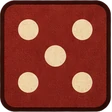
Best 2 of 4d6 11 damage
Psychic: defend with cunning or wisdom. Mystical: defend with grace or valour. Physical: defend with agility or brawn.

The battlefield is divided into zones, affecting movement and range.
 Take +1 wound when hurt.
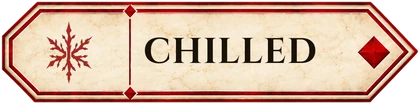 Cannot use Armour.
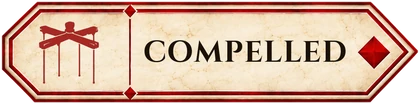 Must obey directive.*
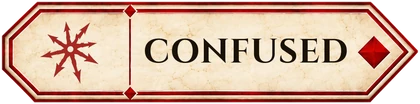 Can only attack at close range.
 Must attack closest target.*
 Must flee source of fear.*
 Cannot be targeted.
 Take 1 wound each round.
 Gain +1 to defence.
 Cannot move until freed.
 Cannot act and move.
*Compulsion mark: can push to ignore.
Ready to run it yourself?
Get the free Quickstart →